



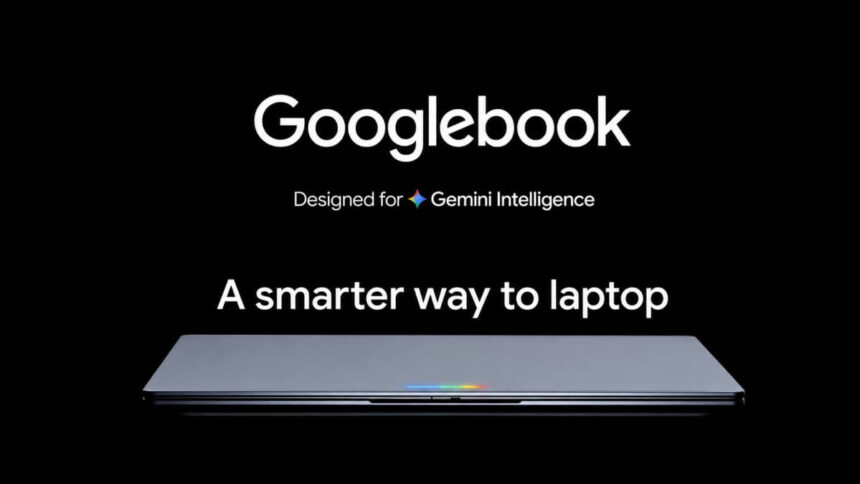
Google has revealed a new laptop platform called Googlebook, nearly 15 years after launching Chromebooks and ChromeOS, which sparked a wave of affordable, useful, web-based notebooks that would eventually dominate the US education market.
Google’s largest rethinking of the laptop since the Chromebook began with the launch of Googlebook, a new class of computers based on Gemini Intelligence. It might help the business get a stronger position in the market for high-end computers.
Google unveiled the platform on YouTube’s The Android Show, where it also revealed new features that will be included in Android 17 and Gemini Intelligence (you can learn more about that here).
The platform is called Googlebook, and Dell, Acer, Asus, HP, and Lenovo have all agreed to build Googlebooks later this fall. Google is deliberately not disclosing the name of the operating system just yet (it was internally nicknamed Aluminium OS).
Later this year, the business promises to provide further details. Alexander Kuscher, a senior director at Google who oversees Android laptops and tablets, stated:
“You want to take advantage of the fact that this ecosystem is innovating so fast that you make sure that laptops are at the tip of that innovation wave—building on top of Android technologies makes that so much easier for us”.
According to the firm, Googlebooks creates laptops with AI support, Android phone connectivity, and high-end hardware by fusing the Android app ecosystem with the ChromeOS browser base. According to Google, the first devices from Acer, ASUS, Dell, HP, and Lenovo will be available this autumn.
Google’s larger transition from operating systems to what it refers to as an intelligence system is reflected in the launch. According to Google, Gemini will be the focal point of the Googlebook experience, providing proactive and individualized support for desktop workflows, files, and apps.
Magic Pointer, a cursor-based AI tool created with Google DeepMind, is the primary feature. To get contextual Gemini ideas, users can move the pointer over objects on the screen. For example, they can combine two photos to imagine an object in a room or create a calendar event from a date in an email.
Additionally, Googlebooks will allow Create your Widget, which enables users to ask Gemini to create unique desktop widgets. According to Google, the functionality can establish dashboards for trips, bookings, countdowns, and other tasks by connecting to apps like Gmail and Calendar.
Additionally, the laptops are made to be more compatible with Android phones. According to Google, users will be able to view, search, or input phone files from the Googlebook file browser using Quick Access and access phone apps from the laptop without the need for manual transfers.
Instead of marketing the product as a straightforward Chromebook update, Google is presenting it as a high-end laptop category. According to the business, Googlebooks will have a unique glowbar style and come in various sizes and forms from its PC partners.
Google is now more directly involved in the competition for AI PCs, while Apple has integrated Apple Intelligence into macOS and Microsoft has pushed Copilot Plus PCs. Google is betting that Gemini won’t only function as a chatbot within apps but will eventually become the primary interface layer on computers.