

In between 2019 and 2023, Microsoft invested $13 billion in OpenAI. At first, the business expected the profit of $92 billion, according to internal records which were made public this week due to legal proceedings. That foretelling now appers to be significantly modest.
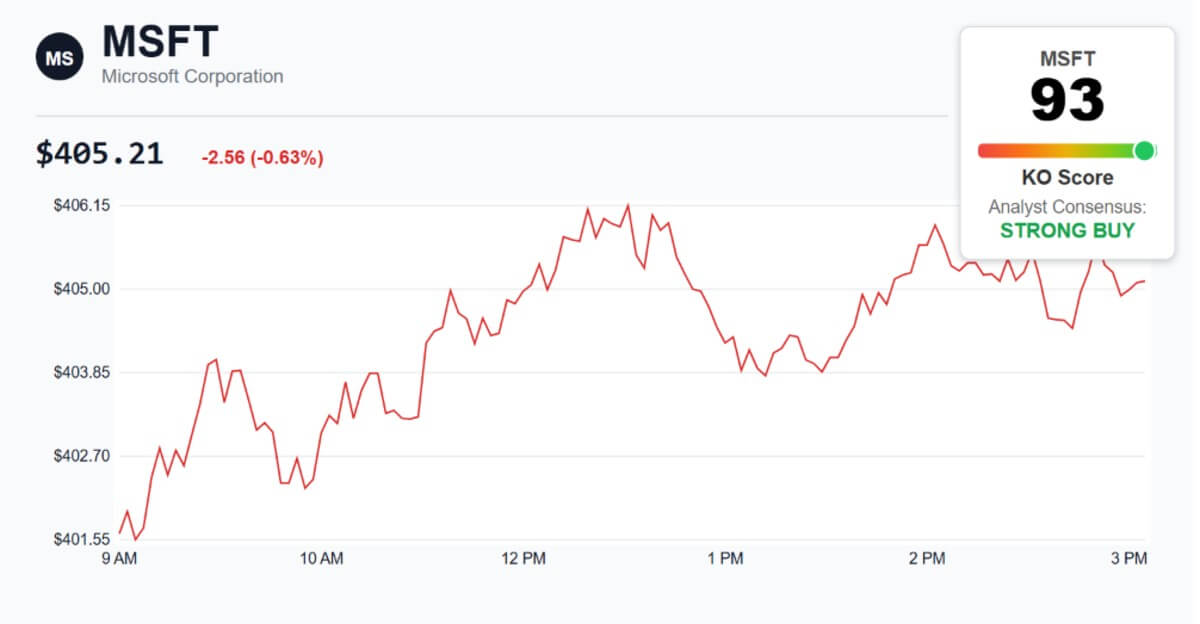
As of May 12, MSFT shares are trading close to $408, indicating a more than 15% year-to-date loss in 2026. However, there is an asset on the company’s balance sheet that significantly changes the investing thesis.
Microsoft continues to have a completely diluted 26.79% economic share in OpenAI. This stock investment has an estimated worth of $228.3 billion, or almost 8% of overall market capitalization of the Microsoft, given current $852 billion valuation of OpenAI following its historic fundraising round.
In February, a historic milestone took place when OpenAI secured $122 billion at a post-money valuation of $852 billion. All previous information for private investment rounds were surpassed through this funding event.
Microsoft disclosed $5.9 billion in net profit because of the OpenAI shareholding for the nine-month period which ends on March 31, 2026. This indicates a major reversal, compared to the $2.7 billion in net losses reported during the same period one year earlier.
The windfall was not the result of OpenAI turning a profit. However, it was the outcome of an accounting change generated by October 2025 conversion of Open AI to a Public Benefit Corporation organization. Despite a slight dilution in its ownership percentage, Microsoft was able to record the rise as income due to the quick appreciation of its valuation.
The Cloud Computing Connection
The financial connection goes much beyond stock ownership. With agreements to share revenue promising regular income to Microsoft through the end of this decade, OpenAI made a commitment to buy $250 billion worth of Azure computing services.
With an annual revenue run rate of $37 billion, AI division of Microsoft is now expanding at a rate of 123% yearly. This advancement trajectory is directly influenced by major investment of Open AI in cloud infrastructure.
Additionally, although these rights are no solely owned, Microsoft acquired licensing rights to OpenAI’s technology portfolio as well as products until the end of 2032. Eventhough OpenAI is now free to make connection with competitors cloud platforms, the commercial infrastructure that ties it to Microsoft is still substantial and long-lasting.
Implications of IPOs for Shareholders
According to reports, OpenAI wants to be valued at $1 trillion when it goes public. Microsoft’s stock position would increase above current estimates if this came to pass.
Crucially, a public sale would not end the strategic partnership. Ownership structure of OpenAI has little effect on the different contractual frameworks that control the Azure procurement obligations as well as intellectual property license agreements.
In accordance with CFO Amy Hood, Microsoft is expecting problems with capacity to keep happening into 2026, with capital expenditures expected to surpass $40 billion in the following quarter. Funding for this infrastructure expansion could possibly be acquired without increasing debt by the means of partial selling of shares of OpenAI shortly after an IPO.
In the meantime, Elon Musk’s lawsuit is still pending in an Oakland federal court. Along with Microsoft, OpenAI co-founders Sam Altman and Greg Brockman are named in the case, which seeks $135 billion in damages and alleges unlawful conversion from nonprofit to for-profit status.