




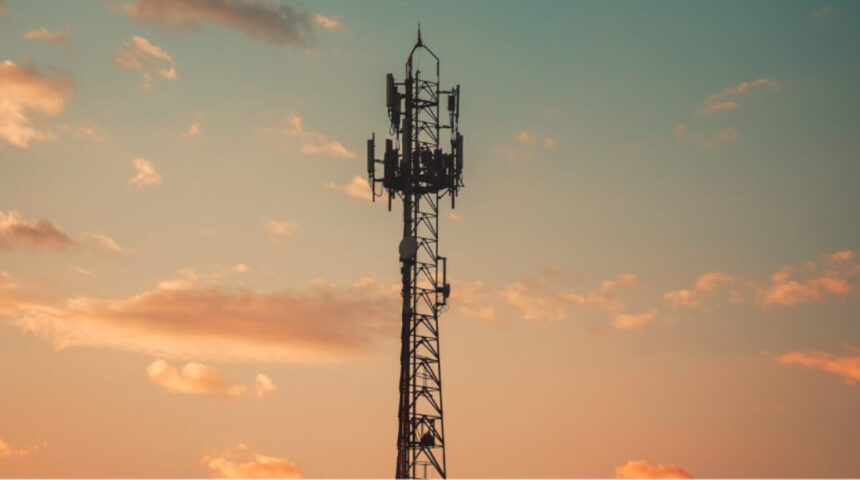
Governor Sarah Huckabee Sanders unveiled the Broadband Equity, Access and Deployment Program (BEAD) in late August 2025, a $1 billion effort to bring broadband internet access to all of Arkansas. The ultimate goal, which was both ambitious and concerning, was to ensure that every Arkansas home and business would have dependable, quick internet connectivity.
During the unveiling, Sanders stated:
“The BEAD Program is about more than faster Internet — it’s about opportunity. By connecting every community with high-speed access, we’re giving students the tools to succeed, entrepreneurs the ability to grow their businesses and families access to better healthcare close to home. Arkansas is showing the nation how smart, efficient investment can strengthen communities, expand upward mobility and drive lasting economic growth.”
Was it really that important to increase access to the internet, which is now so ubiquitous that we practically carry it in our pockets, a portal for everything from banking to making reservations for food to viewing pictures of friends and family, and something that, depending on its still-disputed origin, first appeared more than 40 years ago?
Glen Howie analyzes all of this while sitting in a top-floor conference room at the Arkansas Department of Commerce many months after Sanders’ announcement. Howie’s primary responsibility as Arkansas’s state broadband director is to make the governor’s billion-dollar plan a reality. Simultaneously, he and others at the state broadband office are bringing attention to the fact that, contrary to popular belief, many individuals do not have access to the internet; this issue was already being investigated before Sanders even assumed office.
Howie stated:
“The Arkansas Broadband Program started back in 2019, pre-COVID[-19]. It was an initiative originally of Gov. [Asa] Hutchinson because the administration at the time realized that there was an issue prepandemic.”
Since, well, the internet, internet coverage has been a problem for the state. Smaller, more dispersed settlements, many of which are quite rural, can be found in Arkansas. The task is made more challenging by the distinctiveness of such communities. For instance, web connectivity in the flatter, more southern Delta region differs significantly from that in the steep parts of north Arkansas.
The harsh reality is that a resident’s requirement for dependable broadband to make up the shortfall increases with distance. For people who reside far from cities and town centers, web-based delivery services like Amazon are even more crucial. After years of trying to get funds, Sanders, Howie, and others are optimistic that BEAD’s billion-dollar boost is the solution Arkansans need.
Howie added:
“Before BEAD, we’ve done three rounds of funding and awarded over $500 million to date. So we’ve made great progress. Actually, from 2021 to 2024, Arkansas led the nation in increased broadband activity with an increase of 9 percent.”
Despite all the funding and effort put into it, BEAD is not a rescue initiative. Instead, it serves as a doorway for potential ISPs that want to establish themselves in underprivileged areas, and several are doing so. Initially, 33 ISPs submitted 730 applications to the Arkansas State Broadband Office in an attempt to participate in a statewide outreach initiative.
One of those applications came from Little Rock-based ISP Aristotle, whose CEO, Elizabeth Bowles, praised the state’s efforts to draw attention to a persistent and frequently disregarded issue.
Bowles said:
“It’s creating an educational and medical divide. That is pretty stark when you start looking at rural America in general.”
According to Bowles, ISPs have an almost moral duty. She claimed that she was impacted by the struggles of families during the COVID-19 pandemic, families who were left behind as school systems tried distant learning. However, any ISP is fundamentally a company, which presents an issue.
Bowles further added that:
“The economics of fixed wireless are such that if you can get 40 customers on a tower, you can make your money back within 12 months. Those are not the economics of fiber. Even if you’re super efficient and own your own construction company, if you have less than 10 people per linear mile on a fiber line, it’s very, very hard to recoup your investment.”
ISPs like Aristotle will have a secure starting point for conducting business in areas where very little has been done thanks to the funds and resources provided by the BEAD program. Howie and Bowles are both aware of the continued dominance of market concepts. Without assistance, an ISP operating quickly in densely populated areas like Bentonville or Little Rock is unable to justify the expense of establishing a presence in an underserved area. Even if they did, the price points would probably need to be changed to suit the local economy.
With BEAD’s assistance, Bowles looks for ways to expand his clientele by offering reasonable prices for essentials that every Arkansan should have in 2026.
Referencing warp-speed internet hookups made to handle multiple household systems — such as gaming and streaming — in one fell swoop, Bowles stated that:
“Most people don’t need that much service. So there is a product that will allow people to stream Netflix, work from home, talk to their doctor and do homework all at the same time. That can be offered for $40 a month.”
Even 200- or 100-megabit packages will be reasonably priced ways to provide dependable internet connection and, most importantly, improve the lives of Arkansans, even if it isn’t a premium, multigigabit offering.
Bowels said:
“There needs to be the understanding on the part of providers that the lower-cost option needs to be made available. We are keenly focused on overlooked communities and especially persistent poverty.”