

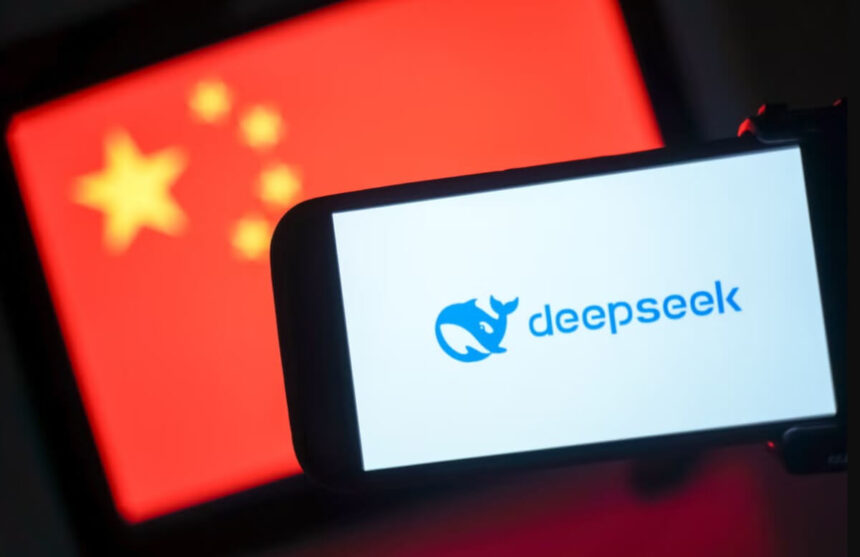
More than a year after shocking the world with a low-cost reasoning model that matched the capabilities of US competitors, Chinese startup DeepSeek unveiled a new AI model with “drastically reduced” costs on Friday.
The rivalry between China and the United States has escalated due to the AI race, and on Thursday, the White House accused Chinese organisations of a huge attempt to steal AI technology.
With a generative AI chatbot driven by its R1 reasoning model, Hangzhou-based DeepSeek debuted in January of last year, upending preconceived notions about US dominance in the strategic area.
The business praised the new version, DeepSeek-V4, as “world-leading…” with dramatically decreased compute (and) memory costs” in a separate announcement on X and stated that it “includes an ultra-long context of one million words” in a statement on social media platform WeChat.
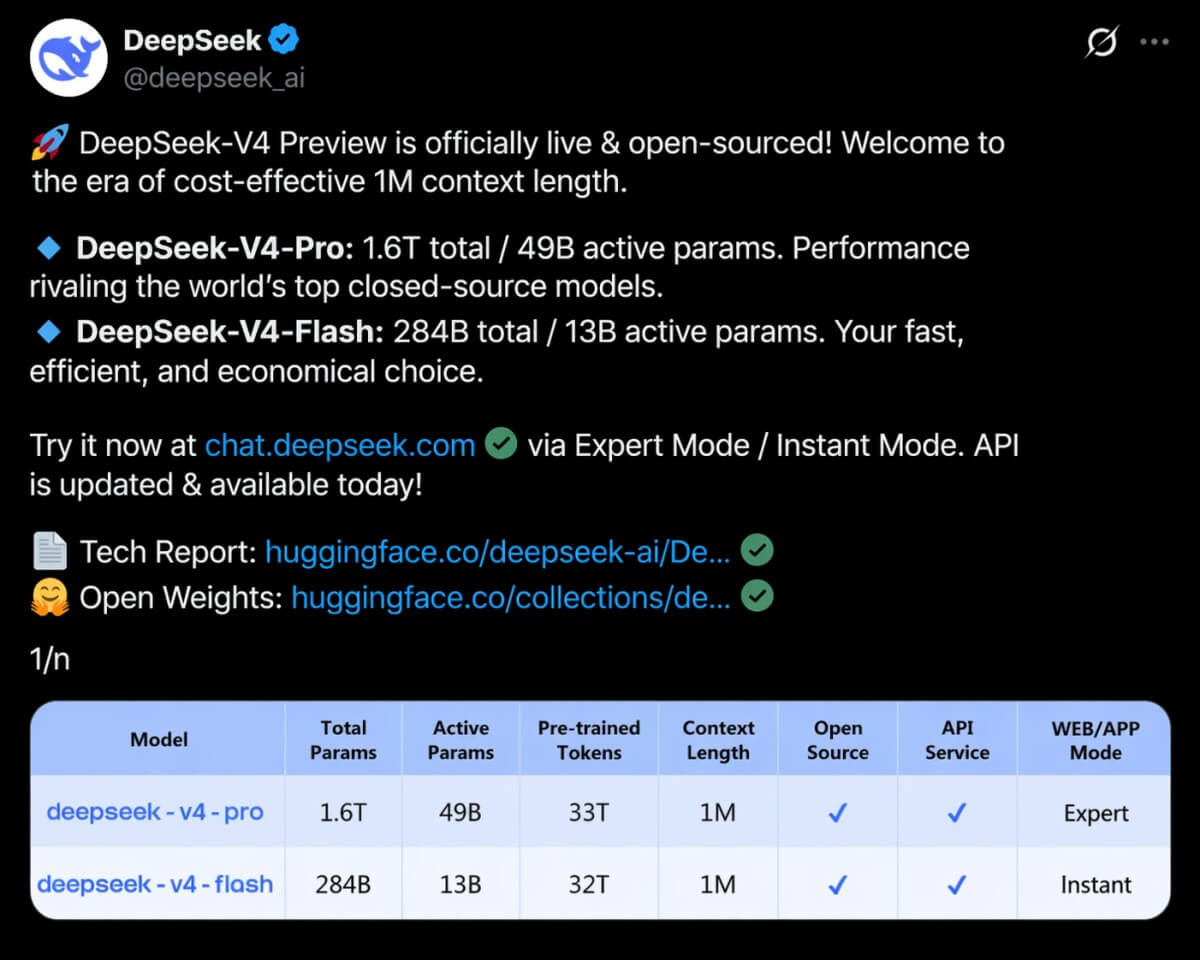
https://x.com/deepseek_ai/status/2047516922263285776?s=20
According to the WeChat statement, the model “(achieves) leadership in both domestic and open-source areas across agent capabilities, world knowledge, and reasoning performance.” This is because the model’s context length influences how much information a model can absorb to assist it execute tasks.
According to the corporation, a “preview version” of the open source model is currently accessible where as according to experts, the debut of V4 represents a “turning point” in terms of price and hardware.
Zhang Yi, the founder of tech research firm iiMedia, told AFP:
“This addresses the long-standing issues of slower performance and higher costs associated with long context lengths, marking a genuine inflection point for the industry,”
He said:
“For end users, this will bring widespread, accessible benefits. For instance, if ultra-long context support becomes a standard feature, long-text processing is expected to move beyond high-end research labs and enter mainstream commercial applications”.
The DeepSeek-V4-Pro and DeepSeek-V4-Flash versions of the new V4 are available; the latter is “a more efficient and economical choice” due to its reduced parameters.
The models’ ability to make decisions is improved by the V4-Pro’s 1.6 trillion parameters and the V4-Flash’s 284 billion parameters.
According to the DeepSeek statement, the model has also been “optimised” for well-known AI Agent products including Claude Code, OpenClaw, OpenCode, and CodeBuddy.
The statement added:
“In world knowledge benchmarks, DeepSeek-V4-Pro significantly leads other open-source models and is only slightly outperformed by the top-tier closed-source model, (Google’s) Gemini-Pro-3.1.”
In what was also referred to as a “Sputnik moment” for the sector, last year’s alleged “DeepSeek shock” caused a sell-off of AI-related stocks and a reevaluation of business strategy.
Although the chatbot’s performance was comparable to that of ChatGPT and other leading American products, the company claimed that it required a lot less processing power to create.
However, the chatbot frequently declined to respond to enquiries about delicate subjects like the 1989 Tiananmen crackdown, raising concerns about data privacy and censorship.
Chinese towns, healthcare facilities, the financial industry, and other enterprises have all embraced DeepSeek’s AI tools.
This has been influenced in part by DeepSeek’s choice to make its systems publicly available and open source, as opposed to the proprietary models offered by OpenAI and other Western competitors.
However, ahead of Donald Trump and Xi Jinping’s anticipated summit in Beijing next month, the White House has accused Chinese companies of competing to “steal” American technology.
Trump’s science and technology chief advisor Michael Kratsios said in a post on X:
“The US has evidence that foreign entities, primarily in China, are running industrial-scale distillation campaigns to steal American AI.”
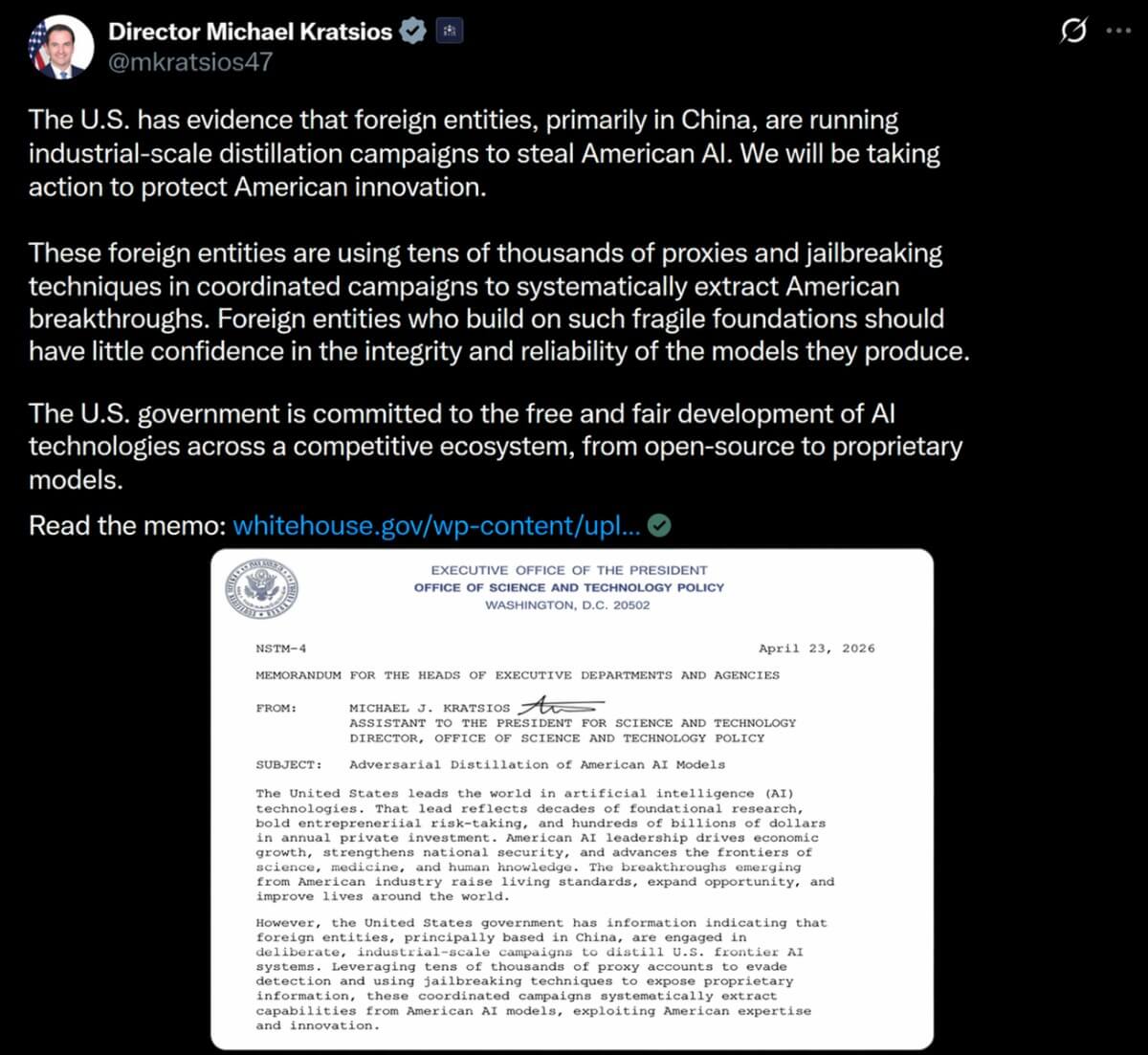
https://x.com/mkratsios47/status/2047316220785905948?s=20
In AI development, distillation is a standard procedure that businesses frequently employ to produce smaller, less expensive versions of their own models.
DeepSeek’s statement on Friday coincided with Meta’s revelation that it would lay off 10% of its team in an effort to increase productivity while making significant investments in artificial intelligence. Microsoft reportedly wanted to reduce its workforce as well.